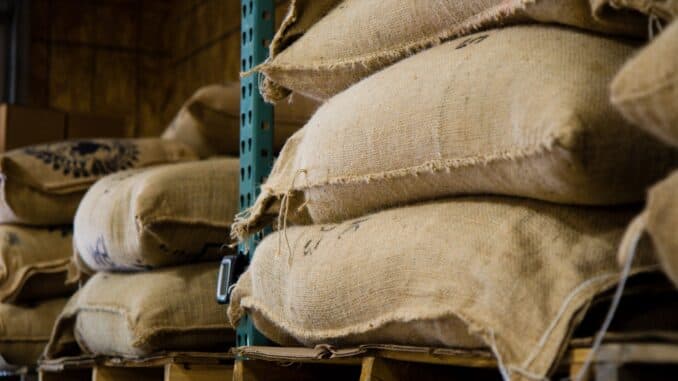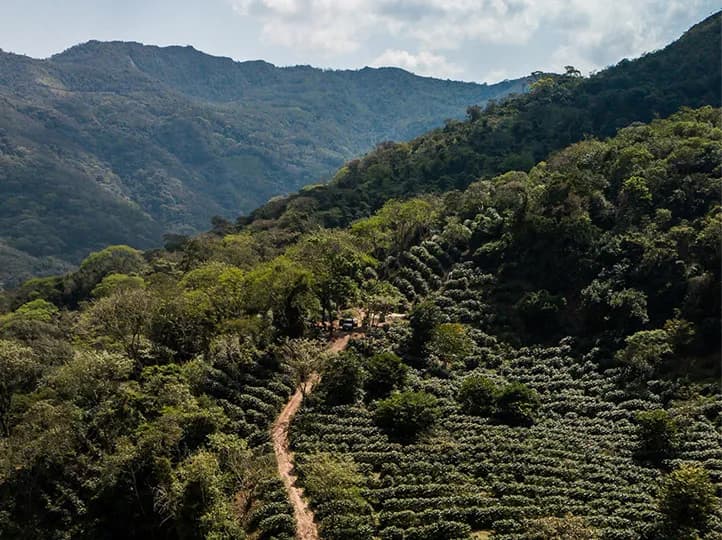
Bolivia is one of the smallest specialty coffee origins in South America
Limited volumes. Small-scale structures. Careful selection.
Why Bolivia?
With its comparatively low production volume, Bolivia plays only a minor role in the global coffee market.
Yet it is precisely this structural limitation that creates room for quality rather than volume.
The main coffee-growing areas are located in the Yungas, especially around Caranavi, at altitudes of 1,200 to 2,000 metres.
- Family-run farms
- Small-scale farming
- Manual harvesting
- Limited export volumes
- High varietal diversity
Regional characteristics
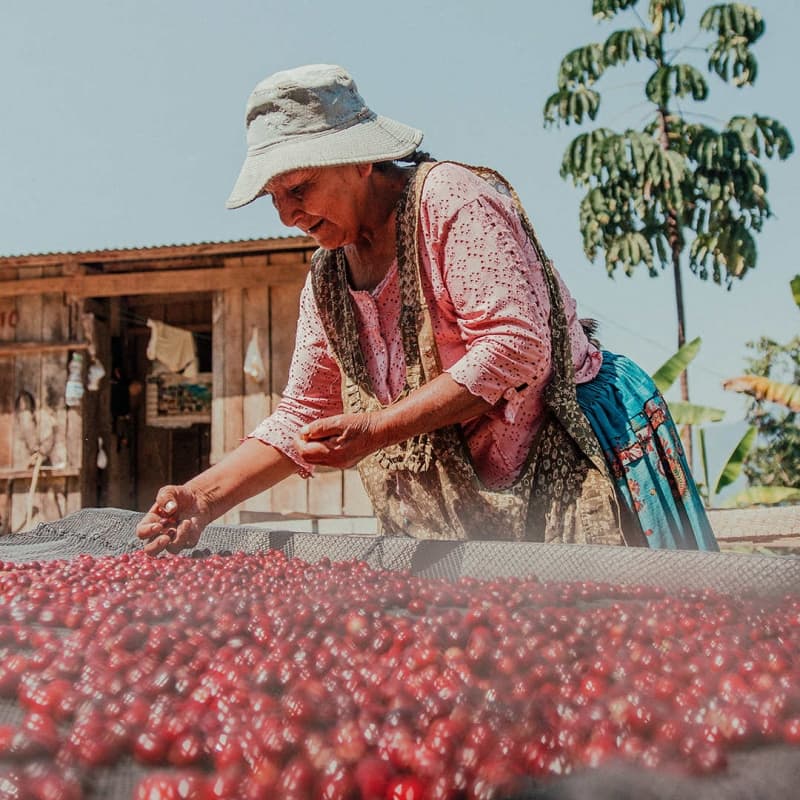
Bolivian coffee is shaped by a subtropical highland climate, marked by significant elevation and cool nights.
These conditions slow the ripening of the coffee cherries and contribute to a clear, complex taste profile.
The result is coffees with vibrant acidity, floral accents, and fruit-forward character.
- Subtropical highland climate
- Slow ripening
- Balanced, clear acidity
- Milk chocolate and caramel
- Citrus and floral notes
Structural reality
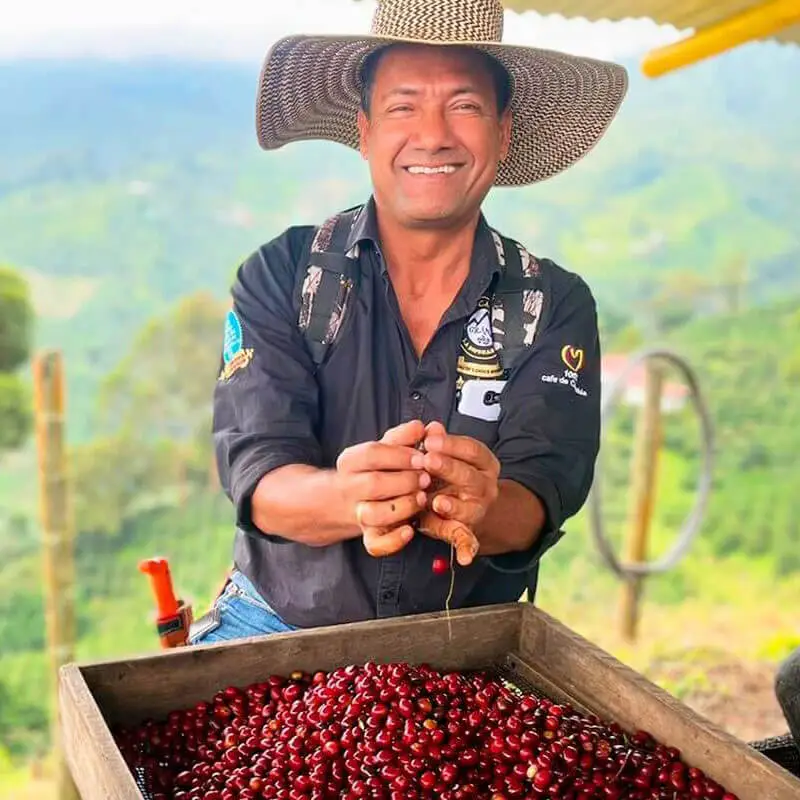
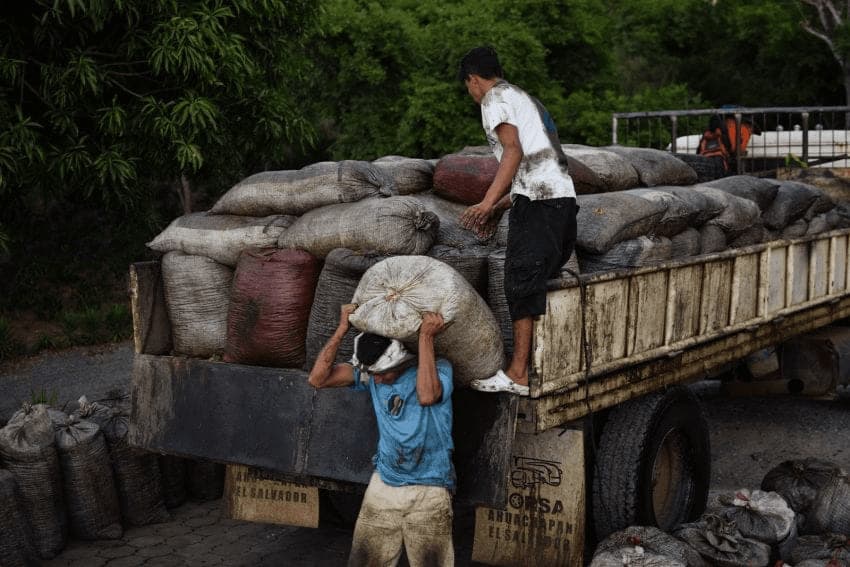
Coffee production in Bolivia is shaped by small-scale structures and logistical challenges.
Many farms are located in remote areas, transport routes are demanding, and export processes are often less predictable than in larger producing countries.
This limits volume and availability, while also creating the conditions for selective, quality-focused sourcing.
- Limited infrastructure
- Restricted export capacity
- Higher transport costs
- Low predictability for larger volumes
Selection at farm level
Through direct exchange with producers and export partners, our selection begins at origin.
What matters is not only taste and quality, but also transparency, documentation, and a clearly traceable selection process.
This creates an approach to sourcing that makes quality tangible and supports long-term collaboration.
- Farm visits and direct exchange
- Cupping in line with SCA protocol
- Documentation of lot data

Microlots
Microlots from Bolivia are small, selectively prepared lots with traceable origin and distinctive character.
They are often available only seasonally, exportable in limited quantities, and not intended for large-scale standard programmes.
That is exactly what makes them especially well suited to differentiated single-origin offerings and distinctive specials.
- Small volume
- Seasonal
- Distinctive character
- Traceable
- Well suited to single-origin offerings and specials